- Written by
- Paul, Founder
- Published
- June 27, 2026
- Reading time
- 5 min
- Written for
- Homeowners and interior designers
They will not usually say so directly. They will say it felt calm, or warm, or that it was a good place to read. All of that is light doing its work quietly, and almost all of it is the result of decisions somebody made.
Layers
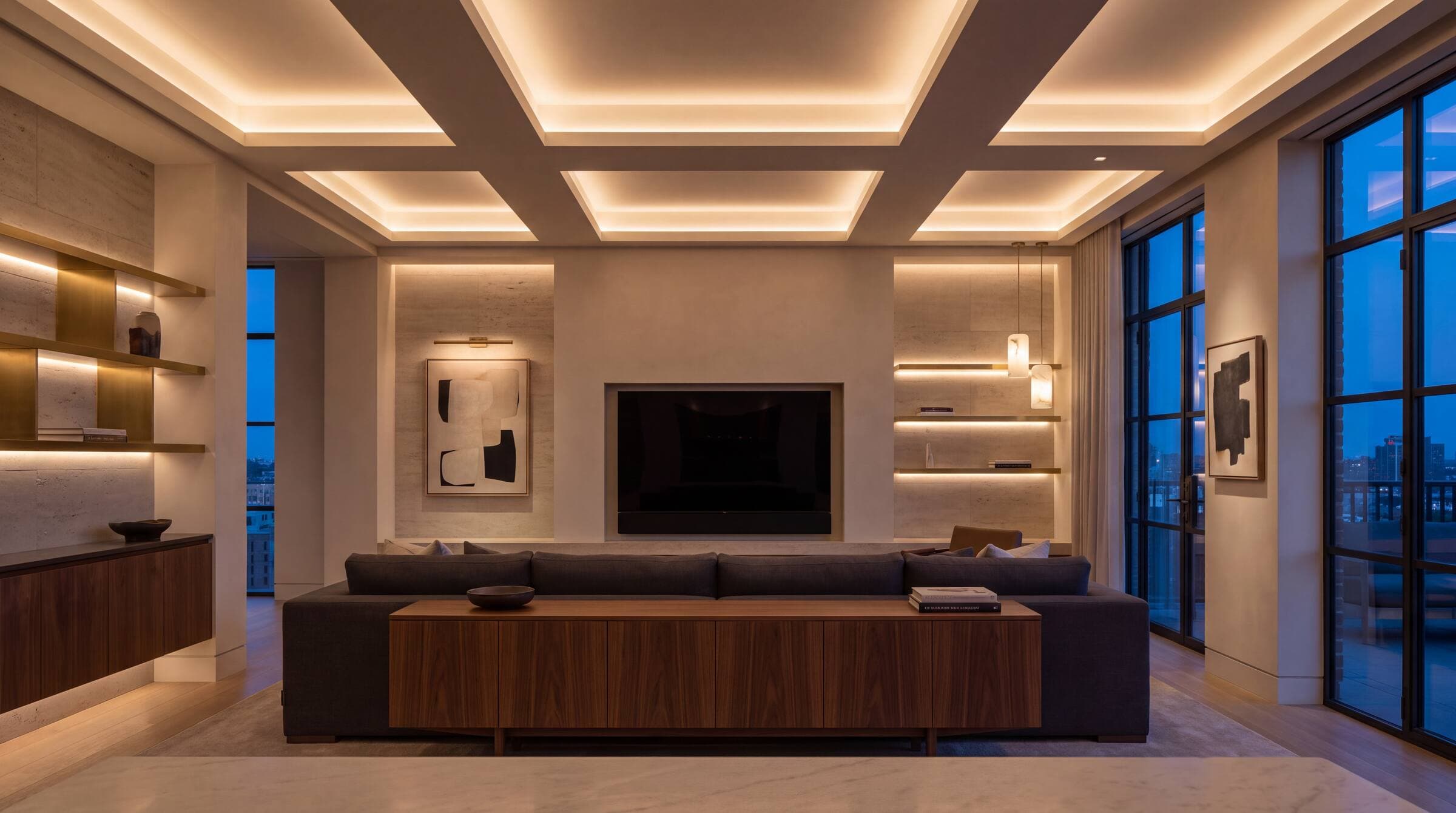
A well-lit room has at least three layers. Ambient light fills the space. Task light does specific work, the island, the desk, the reading chair. Accent light gives the room depth by picking out art, grazing a stone wall, or washing a bookcase.
A poorly lit room has one layer: downlights on a single switch, at full brightness, all the time. This is the most common lighting condition in expensive houses, and it is why some very beautiful rooms feel like a showroom after dark.
Layers only work if they can be controlled separately. That is a circuiting decision made long before anyone chooses a fixture.
Warmth, and why it should change
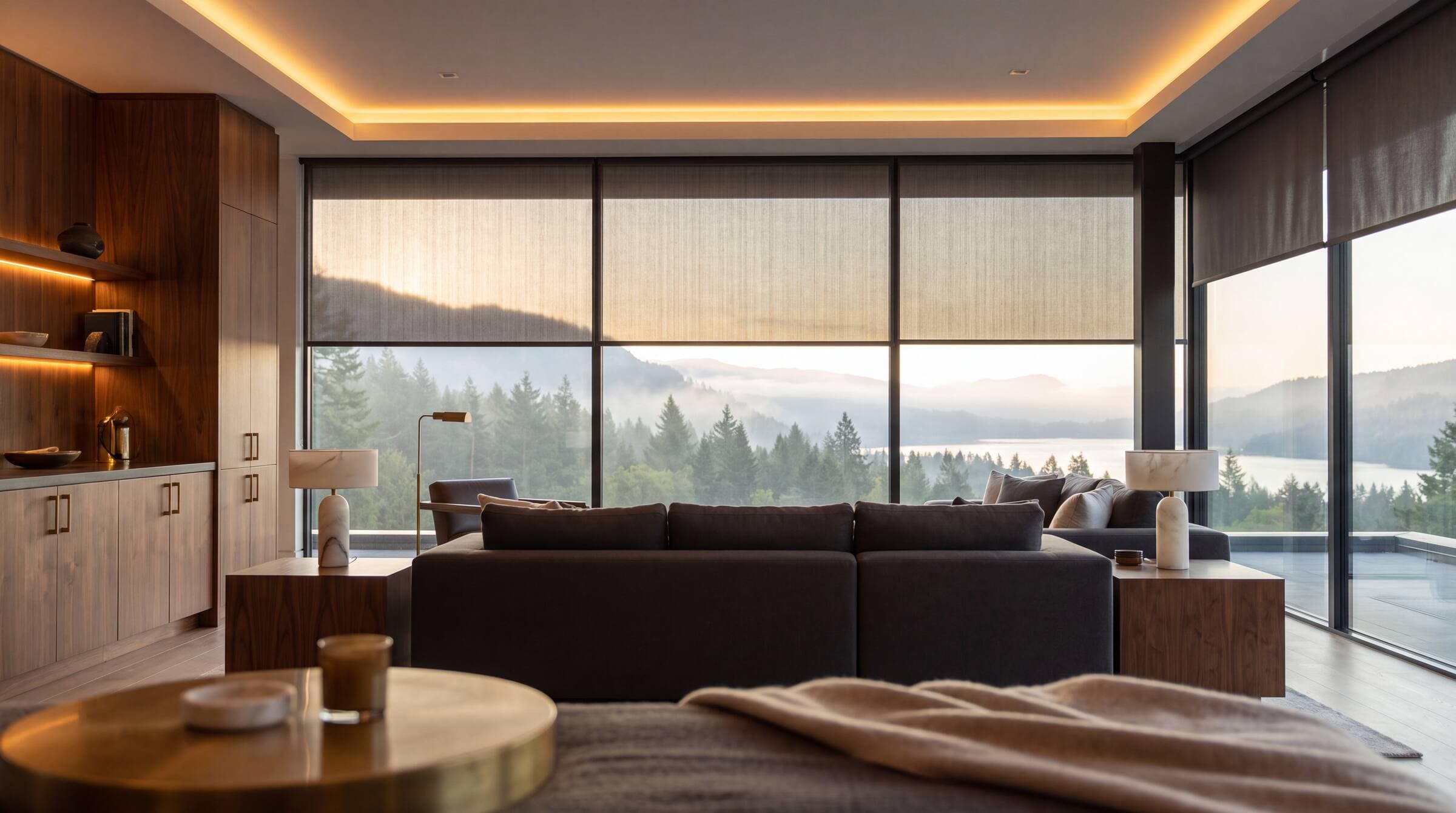
Daylight shifts through the day, cool and bright at noon, warm and low at sunset, and human beings are calibrated to it. Lighting that holds one color temperature from morning to midnight fights that.
Tunable systems follow the sun: cooler and brighter through the working day, warmer and dimmer through the evening. Most people cannot describe what changed. They simply find the house easier to be in at eleven at night.
Dimming is where quality shows
Poor dimming buzzes audibly, flickers at low levels, drops out entirely near the bottom of the range, and shifts color unevenly across fixtures that were meant to match. In a room with forty light sources, one fixture with a cheap driver is the one everybody notices.
Good dimming is silent, smooth to one percent, and consistent across every fixture type in the house. This is a specification problem, matching control modules to the drivers in the fixtures your designer selected, and it is best solved before anything is installed rather than after.
The wall
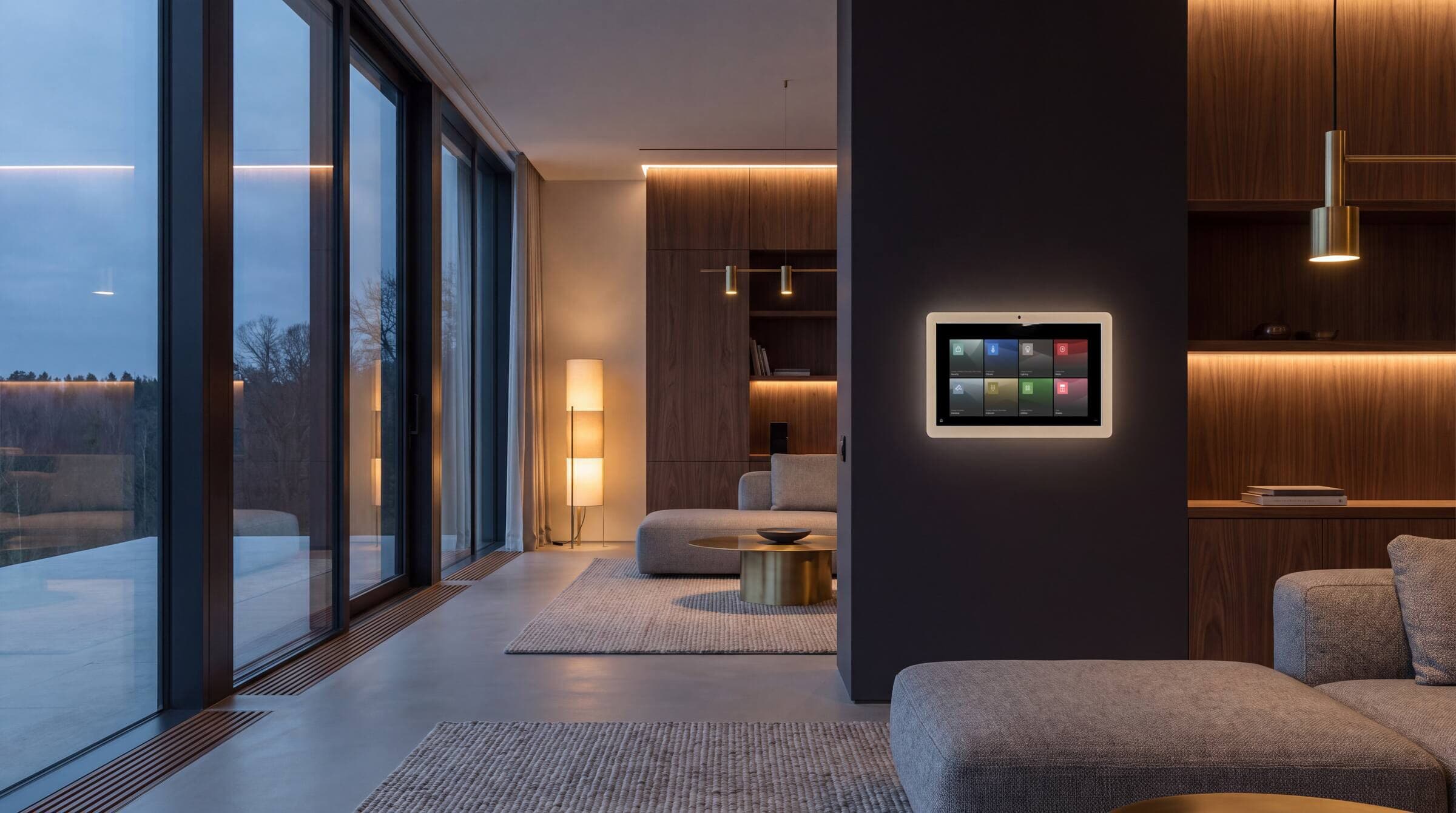
In a house where the stone was chosen carefully and the hardware was chosen carefully, six plastic switches beside the doorway are a strange place to stop caring.
Control systems collapse those into one engraved keypad with buttons labeled in plain language, Entertain, Dining, Reading, Goodnight. Fewer decisions, better finishes, and nobody has to guess which switch does what.
Where to begin
Not with products. Begin by walking your house at the hours you actually use it, and noticing where the light is wrong: the kitchen that is too bright at ten at night, the hallway that is too dark at six in the morning, the living room that has one setting.
That list is a lighting brief, and it is worth more than any equipment schedule.